
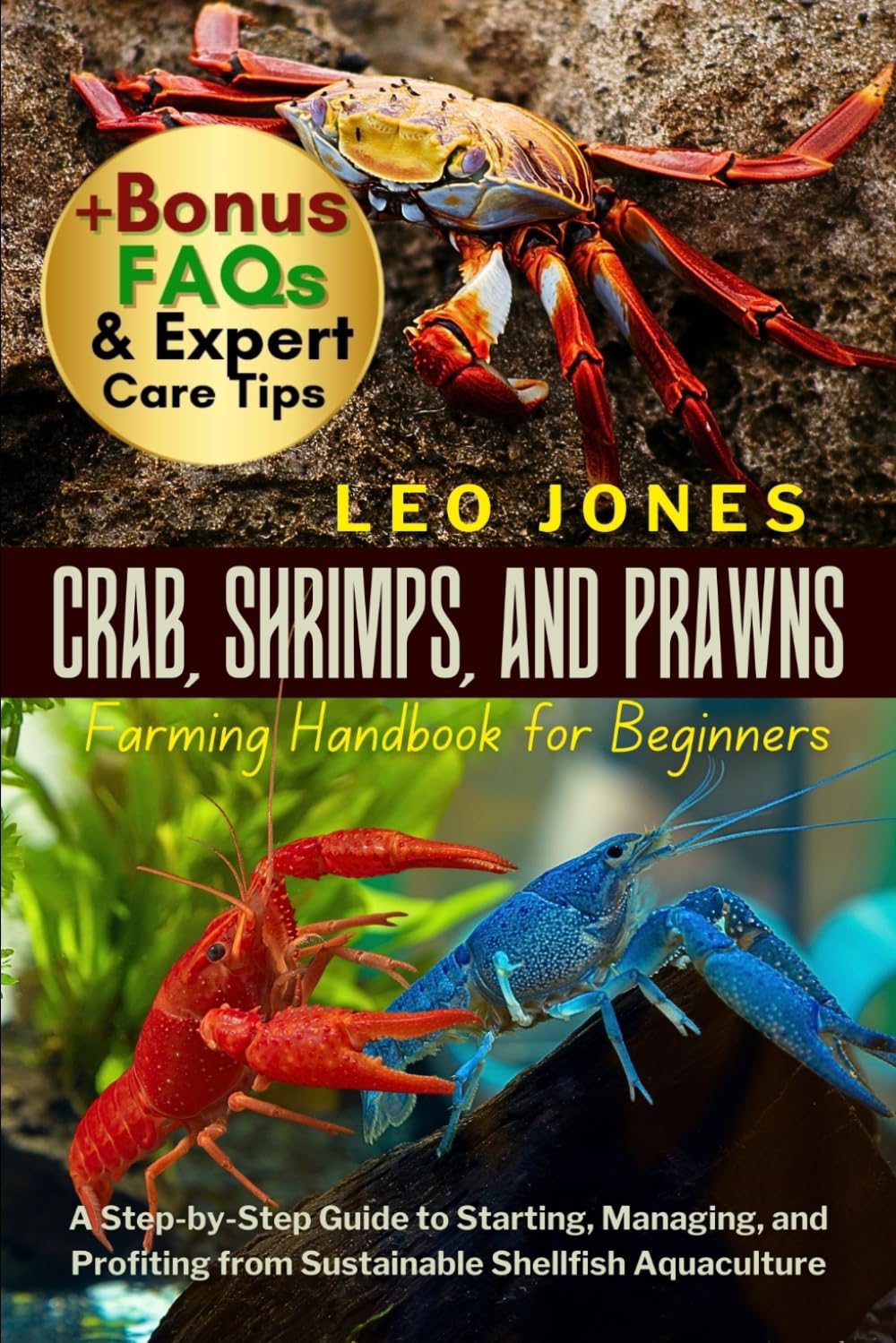
Crab, Shrimps, and Prawns Farming Handbook for Beginners: A Step-by-Step Guide to Starting, Managing, and Profiting from Sustainable Shellfish Aquaculture
Product details
| Management number | 233662996 | Release Date | 2026/06/27 | List Price | $4.84 | Model Number | 233662996 | ||
|---|---|---|---|---|---|---|---|---|---|
| Category | |||||||||
Introduction to Crab, Shrimp, and Prawn FarmingCrustacean farming—specifically of crabs, shrimps, and prawns—has become a vital sector within the global aquaculture industry. For beginners, understanding the foundations of this field is crucial for launching a successful and sustainable operation. This section explains why crustacean aquaculture is important, outlines the global demand and economic potential, and introduces the basic farming methods suited for newcomers. Importance of Crustacean AquacultureCrustacean farming plays a pivotal role in food production, livelihoods, and marine resource conservation. The farming of crabs, shrimps, and prawns addresses several key global needs: Food Security: Crustaceans are a significant source of high-quality animal protein, especially in coastal and developing regions. Employment and Income: Crustacean farms support millions of livelihoods globally—directly through farming and indirectly through hatcheries, feed production, processing, and marketing. Pressure Reduction on Wild Stocks: By cultivating crustaceans in controlled environments, aquaculture reduces overfishing and helps preserve wild populations. Export Revenues: Many countries, especially in Asia and South America, generate substantial export earnings from shrimp and prawn farming.In essence, crustacean farming contributes to economic development, rural upliftment, and ecosystem balance when practiced responsibly. Global Demand and Economic PotentialThe global seafood market has witnessed a sharp rise in demand for crustaceans due to changing dietary preferences, increased seafood consumption, and globalization of trade. Shrimp and prawn in particular are among the most traded aquaculture commodities. Key Statistics: Shrimp alone accounts for nearly 20% of global aquaculture export value. Leading producers include India, China, Vietnam, Thailand, Ecuador, and Indonesia. Crabs, especially mud crabs and blue swimming crabs, are seeing increased demand in Asia, the Middle East, and the United States. Market Drivers: Growing middle-class populations Health-conscious consumers seeking low-fat, high-protein diets Increased urbanization and restaurant culture Innovations in farming, cold chain logistics, and value-added processing Profitability Potential: Crustacean farming offers high returns per square meter compared to many other forms of aquaculture or agriculture. With proper management, small-scale farmers can break even within 6–12 months of operation. Export-quality products often fetch premium prices in international markets. Overview of Farming Methods for BeginnersThere are several farming methods suited to beginners based on their location, access to water sources, budget, and target species. These systems vary in complexity, cost, and production output. 1. Extensive Farming Uses natural water bodies or earthen ponds with minimal inputs Relies on natural feed and tidal flows Low capital investment but lower yield Ideal for rural or coastal areas with ample land 2. Semi-Intensive Farming Combines natural productivity with supplementary feeding Requires basic pond preparation, aeration, and water quality control Moderate input costs with higher productivity than extensive systems Suitable for beginners with moderate capital and technical knowledge 3. Intensive Farming High-density stocking in tanks or lined ponds Requires advanced infrastructure, aeration, filtration, and daily monitoring Uses formulated feeds and high water exchange rates 4. Recirculating Aquaculture Systems (RAS) Closed-loop indoor systems using filtration and water recycling Maximum biosecurity and environmental control High setup costs but allows year-round farming in any location Read more
| ASIN | B0FNZVQH8G |
|---|---|
| ISBN13 | 979-8262216536 |
| Language | English |
| Publisher | Independently published |
| Dimensions | 6 x 0.31 x 9 inches |
| Item Weight | 9.3 ounces |
| Print length | 136 pages |
| Publication date | August 26, 2025 |
Bestseller ranking
Quilt Sets


Customers who viewed this product also viewed
Portraits & Selfies





Correction of product information
If you notice any omissions or errors in the product information on this page, please use the correction request form below.
Correction Request Form